ServicesValue Enhancement Planning
Value Enhancement Planning in Rowlett
We look at what a buyer would likely pay for your business today, find the gaps that pull that number down, and plan the work to close them over the next few years. You get a clear order of priorities, so your effort goes where it moves value most.

Value is built over years, not in the final months
Most owners first learn what buyers care about during a sale, when there is little time left to change anything. Buyers usually pay for cash flow they believe will continue after you leave. Anything that puts that cash flow in doubt lowers the price or shifts it into earnouts and seller notes. That includes one large customer, a business that depends on the owner, or books that need explaining.
Value enhancement planning moves that work earlier. We measure where your company stands, rank the issues by how much they cost you, and set a pace that fits how you already run the business. Some fixes take a quarter. Others, like building a management layer that can run things without you, take two or three years. That is why we like to start early.
What the work covers
A baseline valuation
We start with a careful estimate of what your company is worth today, along with the reasoning behind it. Every later step is measured against this number.
A review of what drives value
We look at customer concentration, recurring revenue, gross margin trends, owner dependence, key employee retention and the state of your systems. Each one is scored the way a buyer would likely weigh it.
Clean, buyer-ready financials
We help you pull personal and one-time expenses apart from operating costs, so your normalized earnings hold up under questions. Where it makes sense, we work with your CPA rather than around them.
A ranked roadmap
You get a written plan listing each improvement, roughly how much value it could add, who owns it and a realistic timeline. Short, high-impact items come first.
Regular progress check-ins
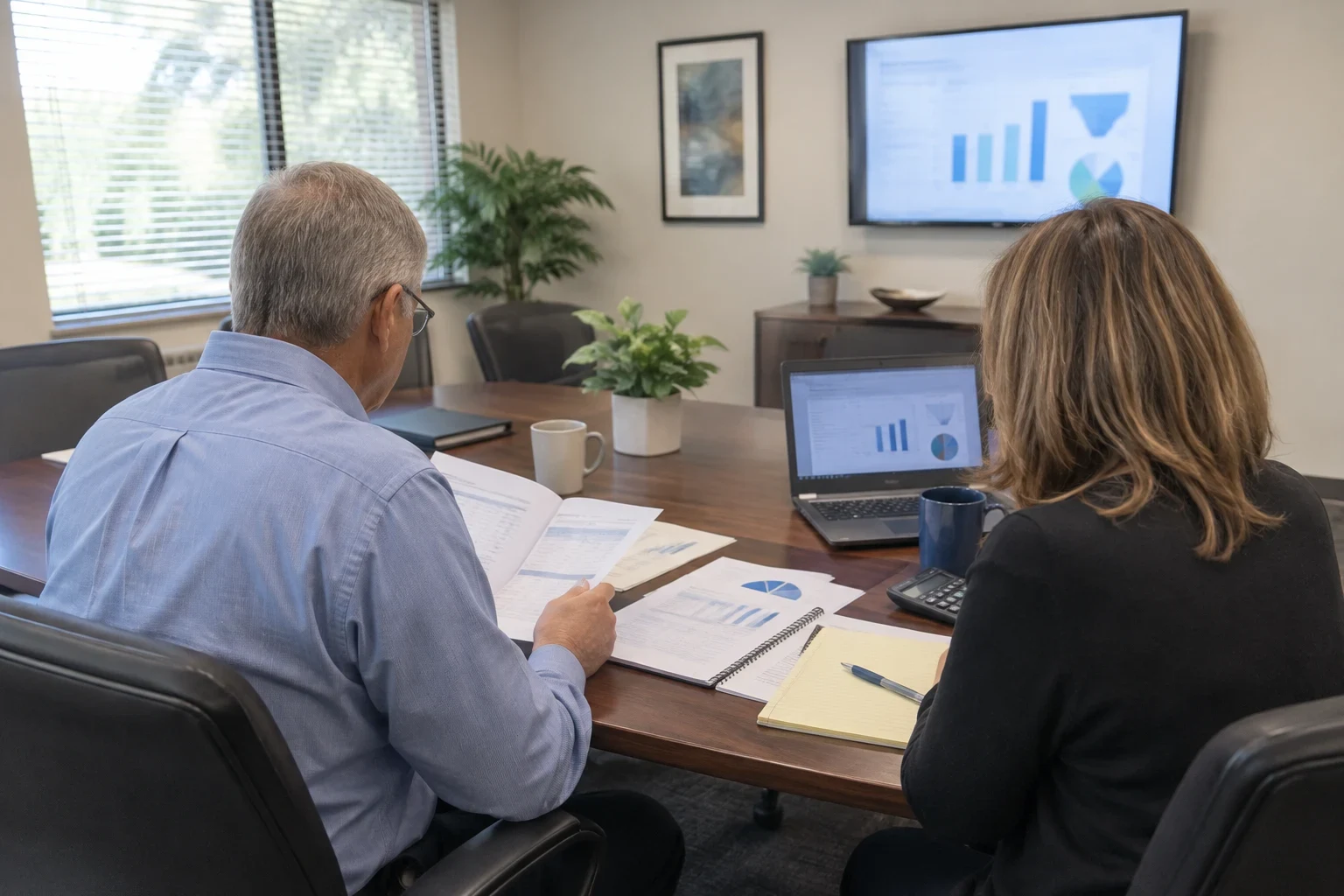
We meet on a steady schedule, at our office or by video or phone, whichever suits your week, to review what has changed and adjust priorities. That regular rhythm keeps the plan moving when daily work fills your calendar.
Signs your company needs this work
- Everything runs through you
- If key customers call you directly and decisions wait for your sign-off, a buyer sees risk. That risk usually shows up as a lower price or a longer earnout.
- One customer carries too much
- When a single account makes up a large share of revenue, buyers discount the whole business. Spreading that weight takes time, so it is worth starting early.
- Your books need a story
- Personal expenses run through the company, or the numbers only make sense once you explain them. Buyers and lenders tend to lose confidence quickly when that happens.
- A valuation came in low
- You had a number in mind and the estimate fell short. The gap usually has specific causes, and many of them can be fixed.
- You plan to step back in a few years
- Selling, retiring or passing the company to family or employees are all easier when value has been built on purpose ahead of the transition.
How we work with you
- 1
A conversation and a valuation
We begin with a confidential call about your goals and timeline, then prepare your free valuation from the figures you share. There is no pressure and no obligation to sell.
- 2
Finding what holds value back
We review your financials and talk with you, and with key managers if you want, about how the company really runs. We note what a careful buyer would question.
- 3
Building the roadmap
We rank each improvement by likely impact and effort, then agree on the first few to tackle. The plan is written so you and your team can follow it.
- 4
Steady progress, then re-measure
We check in on a set schedule, help clear obstacles and update the valuation as changes take hold, so you can see value move instead of guessing.
What shapes the cost
We price the work after we understand your company, and we explain the scope in plain terms before anything begins. The fee depends on how much needs attention and how long you want us involved. Your first valuation is free either way.
- Size and complexity
- A single-location company with one revenue stream needs less analysis than a business with several divisions, entities or locations.
- Condition of your records
- Clean, consistent financials make the review faster. Books that mix personal and business costs take more time to normalize.
- How many issues to address
- Working on owner dependence and customer concentration at the same time is a larger job than tightening margins alone.
- Length and pace of the engagement
- A focused one-year plan costs differently than a multi-year relationship with regular check-ins and updated valuations.
Questions owners ask about value enhancement
- How far ahead of a sale should I start?
- Earlier is better. Three to five years leaves room for slow changes like management depth and customer mix. Even a single year can noticeably improve how your financials and operations read to a buyer.
- Is this only worth doing if I plan to sell?
- Not at all. The same changes that attract a buyer also make your company simpler to run, easier to finance and smoother to hand to family or employees. Plenty of owners take this on with no sale in view, because a stronger business is worth having either way.
- Does my staff need to hear about this work?
- That decision stays with you. The work is confidential, and we bring managers into the conversation only when you think it will help. To most of your team, the changes simply read as a business being run well.
- How is this different from exit planning?
- Exit planning covers the whole transition, including timing, taxes, family goals and who takes over. Value enhancement planning is the part focused on raising what the company is worth before that day comes. Many owners do both, and an exit readiness assessment can show where to begin.
- Do you meet in person?
- Yes. You are welcome at our office, and phone or video works well if your schedule is tight. We work with owners across Rowlett and nearby towns such as Garland, Rockwall and Wylie.
Start with what your company is worth today
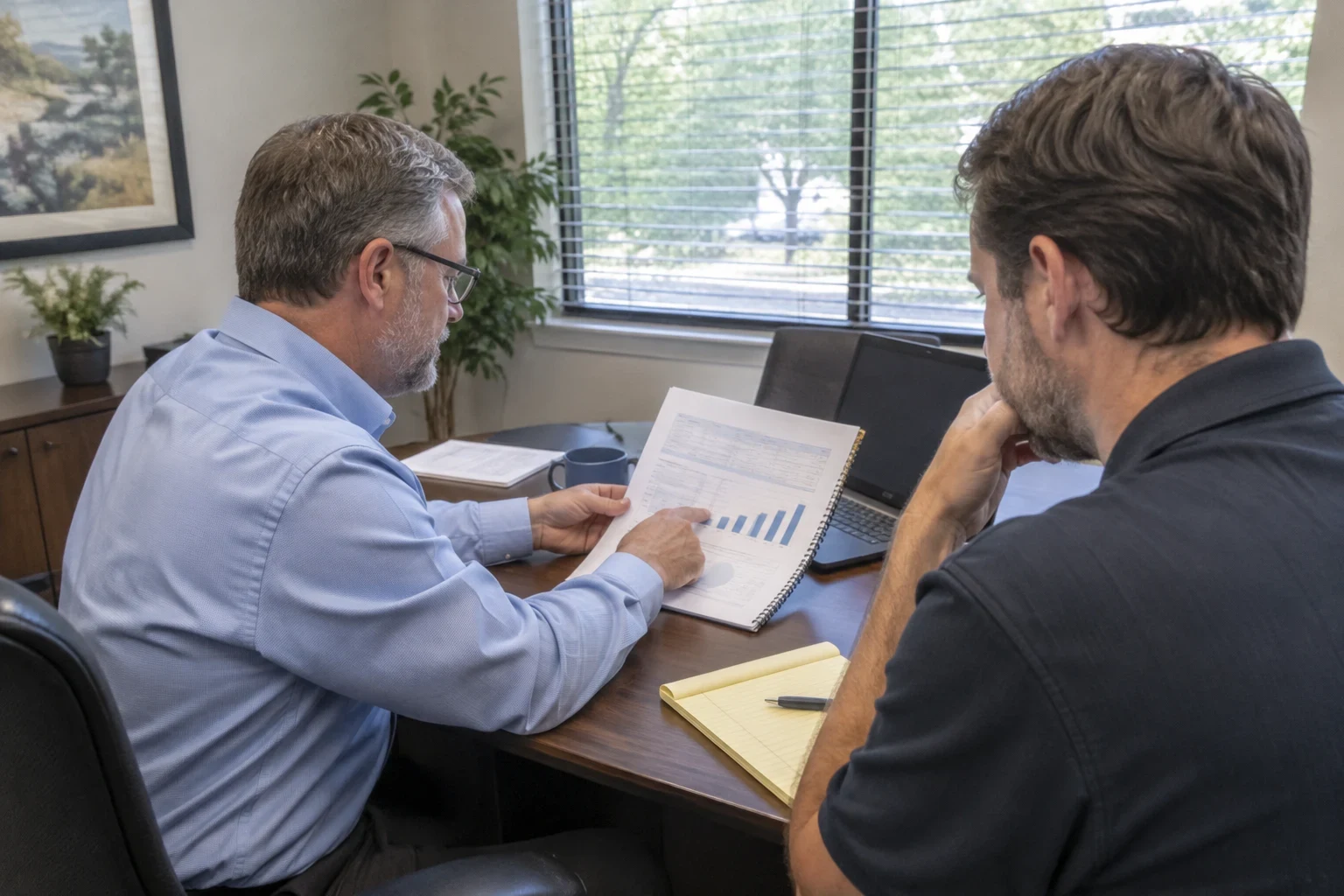
A free valuation gives you a starting number and the first clues about where value is being lost. If you would rather talk first, a 20-minute call with our co-founder is a calm place to begin.